One of the underrated truths about Osaka is how much of the city’s best content is free. The neon canyons of Dotonbori, the food-forward markets, several of the best skyline views, almost all the major shrines, and a surprising number of museums and gardens cost zero yen. A traveler willing to spend strategically can fill an entire 4-day Osaka itinerary with mostly-free experiences and only pay for transit, food, and the occasional headline attraction.
This guide rounds up 20+ free things to do in Osaka for 2026 – tested, reliable, and skewed toward what locals actually recommend (not the same five mall observation decks that show up on every list). Each entry includes hours, the nearest station, and what to combine it with so you can string together a free-day itinerary that doesn’t feel like deprivation.
Quick-Reference: Free Things to Do in Osaka by Category
- Iconic walks: Dotonbori canal, Hozenji Yokocho lantern alley, Nakanoshima riverside.
- Free observation decks: Umeda Sky Building rooftop garden (lower garden free), Abeno Harukas Sky Garden 16F (free), Asahi Beverage Building (free).
- Shrines and temples: Sumiyoshi Taisha, Hozen-ji, Namba Yasaka Shrine, Shitennoji outer grounds.
- Parks and nature: Osaka Castle Park, Nakanoshima Park, Tennoji Park grounds, Minoo Park (day trip).
- Markets and shopping streets: Kuromon Market, Tenjinbashisuji shopping arcade, Shinsaibashi-suji.
- Free museums: Osaka City Central Public Hall (free tours), Naniwa Kuishinbo Yokocho (Tempozan retro food street).
- Free factory tours: Cup Noodles Museum (factory section free; making instant noodles costs ¥500), Asahi Beer factory tour Suita.
1. Walk Dotonbori Day and Night
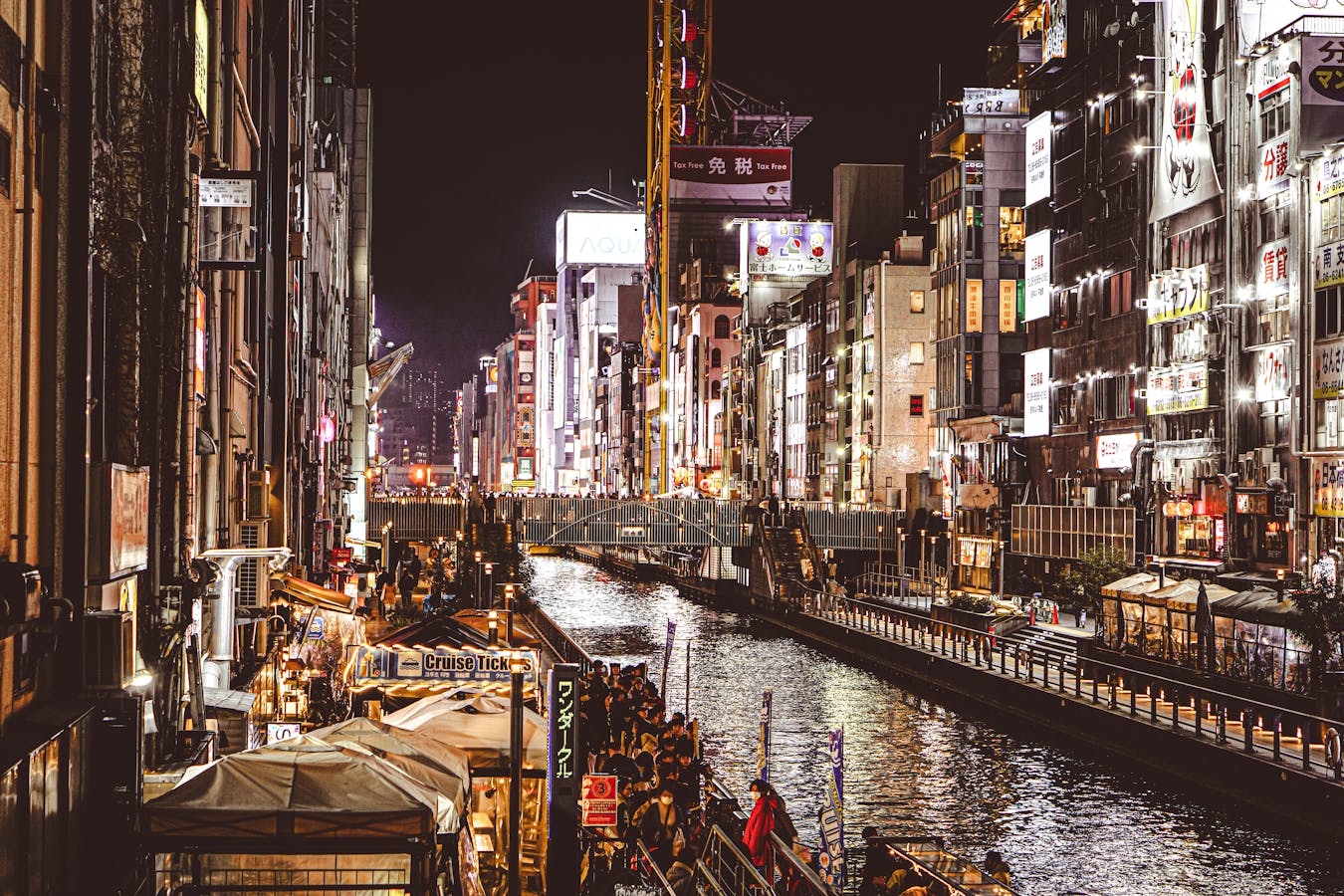
The single most photographed strip of Osaka is also free. Walk the canal-side promenade between Ebisubashi Bridge and Tazaemonbashi Bridge, take the obligatory shot under the Glico Running Man sign, and circle back through the food-stall alley behind Kani Doraku (the giant moving crab). Day-time has the cleaner photography light; night-time is the iconic “Blade Runner” experience the city is famous for. Total walk: 1–2 km depending on detours.
- Best time: 19:00–21:00 for full neon, or sunrise on a Sunday for empty streets.
- Nearest station: Namba (Midosuji, Yotsubashi, Sennichimae lines).
- Pair with: Hozenji Yokocho lantern alley two blocks south.
2. Hozenji Yokocho Lantern Alley
Just around the corner from Dotonbori is Hozenji Yokocho – an 80-meter cobblestone alley lined with traditional paper lanterns and tiny izakayas. At its center is Hozenji Temple, where the moss-covered Mizukake Fudo statue is splashed with water by visitors making a wish. The lantern atmosphere costs nothing; the temple visit costs nothing; only your dinner is paid.
3. Osaka Castle Park (Free Without Going Inside)
The keep itself charges ¥1,200 for entry – but the surrounding 106-hectare Osaka Castle Park is open 24/7 with no ticket required. The Sakuramon viewing platform offers the iconic photo angle of the keep, the moats are spectacular up close, the Hokoku Shrine is free to enter, and during cherry blossom season the Nishinomaru Garden lawn is one of Japan’s premier hanami spots (¥350 entry to that specific garden during peak bloom; the rest of the park is free).
- Hours: Park 24/7. Specific gardens have set hours.
- Best time: Sunrise for empty photos. Cherry blossom evenings for atmosphere.
- Nearest station: Osakajokoen (JR Loop) or Tanimachi 4-chome (subway).
- Pair with: Osaka Museum of History across the street (paid, but the lobby and ground floor are free with skyline views).
4. Sumiyoshi Taisha Shrine

One of Japan’s three oldest shrines (founded around the 3rd century), Sumiyoshi Taisha is the head shrine of all 2,300+ Sumiyoshi shrines nationwide. Its drum bridge (Sori-hashi), arched at a 48° angle, is one of the most distinctive shrine entrances in Japan. The grounds are massive, peaceful, and atmospheric. Entry is free; only specific blessings or ceremonies cost yen.
- Hours: 6:00–17:00.
- Nearest station: Sumiyoshitaisha (Nankai Main Line) – about 25 minutes from Namba.
- Pair with: Sumiyoshi Park ten minutes north.
5. Shitennoji Temple Outer Grounds
Founded in 593 AD, Shitennoji is one of Japan’s oldest officially administered Buddhist temples. The full temple precinct including the inner pagoda complex costs ¥300, but the outer grounds, the entry gate, and the surrounding monasteries are all free to walk. On the 21st of each month, a flea market with hundreds of stalls fills the grounds.
6. Umeda Sky Building Lower Garden (Free)
The famous “floating garden observatory” at the very top costs ¥2,000, but the building’s outdoor lower courtyard, the multi-story atrium, and the European-style basement passage (Takimi Koji) are all free. The architecture itself is one of Osaka’s modernist landmarks (designed by Hiroshi Hara, who later did Kyoto Station).
7. Abeno Harukas Sky Garden (Free 16F Floor)
Japan’s tallest building has a paid observation deck on the 60th floor (¥1,500), but the 16th-floor open-air “Sky Garden” is completely free. The view isn’t quite as panoramic, but you’ll see Osaka stretch toward Mt. Ikoma and you avoid both the queue and the price.
- Hours: 7:00–22:30.
- Nearest station: Tennoji.
- Pair with: Tennoji Zoo (¥500) and Tennoji Park free section.
8. Kuromon Market

“Osaka’s Kitchen” is a 600-meter covered market where chefs and home cooks have shopped since the 1820s. Walking it is free; eating is up to your appetite. Even without buying, it’s a 30-minute sensory tour of fresh tuna, wagyu skewers being grilled, oyster shucking, and pickled-vegetable stalls.
- Hours: 9:00–18:00 for most stalls.
- Nearest station: Nipponbashi (Sakaisuji line).
9. Tenjinbashisuji – Japan’s Longest Shopping Arcade
At 2.6 km, Tenjinbashisuji is officially Japan’s longest covered shopping street. Hundreds of independent shops, kissaten cafés, and 100-yen stores stretch from north to south. Walking the entire length takes about an hour. Free, weather-proof, and a much more local-feeling experience than tourist-heavy Shinsaibashi.
10. Nakanoshima Riverside
The narrow island between the Dojima and Tosabori rivers is downtown Osaka’s quietest stretch. Walk past the Renaissance-era Osaka City Central Public Hall, the National Museum of Art (paid inside, free outside), and the Nakanoshima Park rose garden (free). It’s the calmest 1 km in central Osaka.
11. Cup Noodles Museum (Free Factory Section)
In Ikeda, on the northern edge of greater Osaka, sits the Cup Noodles Museum – the original factory of Momofuku Ando, who invented instant ramen in 1958. The exhibits and historical timeline are completely free to walk. The popular “make your own cup noodles” workshop costs ¥500. The museum is a 30-minute trip from Umeda.
- Nearest station: Ikeda (Hankyu Takarazuka Line).
- Hours: 9:30–16:30, closed Tuesdays.
12. Minoo Park (Free Day Trip)
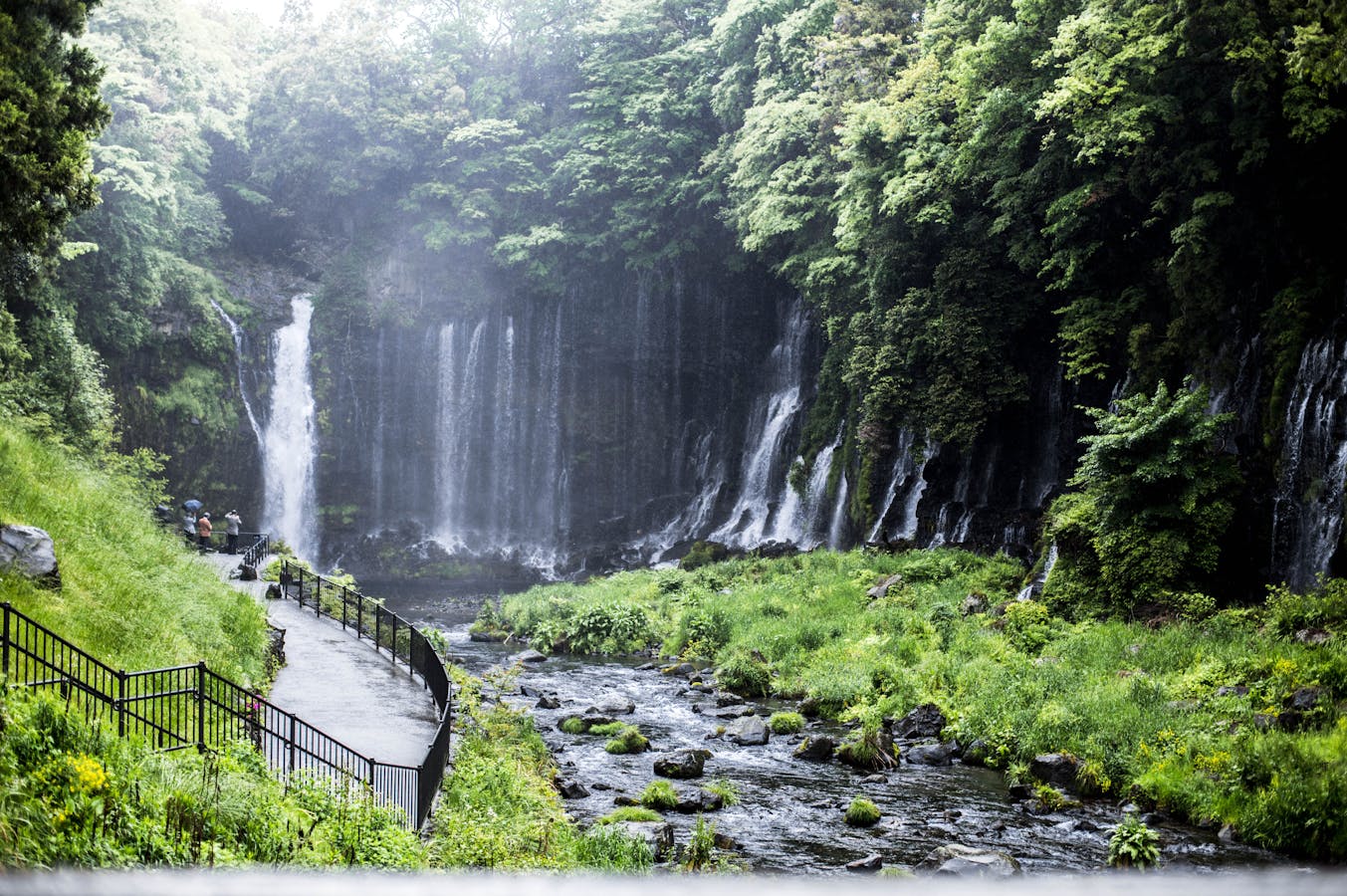
Thirty minutes from central Osaka by Hankyu train, Minoo Park is a wooded valley where a 3 km mostly-paved trail follows the Minoo River up to the 33-meter Minoo Falls. Stone-floor cafés, a small shrine, and the famous “fried maple leaf” snack stalls line the route. Entry is free year-round; the trail is most spectacular in mid-November when the maples turn fluorescent red.
13. Namba Yasaka Shrine (The Giant Lion Head)
Just a few blocks from Namba Station, this otherwise unassuming shrine has a 12-meter-tall lion-head stage that’s said to swallow evil spirits. It’s one of Osaka’s most Instagrammable free spots and takes 5–10 minutes to visit.
14. Osaka Station City Rooftop Gardens
Osaka Station’s rooftop has a series of small open-air gardens (Tenku Farm, Kaze no Hiroba) that double as free observation points. The 11th floor “Time and Space Plaza” looks out over the train tracks and is genuinely peaceful at sunset.
15. Tennoji Park Free Section
The “Tennoji Park” complex includes the paid Tennoji Zoo and Keitakuen Garden, but the central “Chausuyama” hill area, the lawn around the Daido Concrete Stage, and the open-air walking paths are all free. It’s a sprawling lawn that locals use for picnics, with Abeno Harukas towering over the southern edge.
16. Asahi Beverage Building Free Tour
The Asahi Beer Suita Brewery offers free reservation-required factory tours including a 20-minute production walk-through and a complimentary fresh-beer tasting at the end. Reserve online a few days in advance. About 25 minutes from Umeda.
17. Osaka Museum of Housing and Living (Free First Floor)
The full museum costs ¥600 for a wonderful Edo-period street recreation, but the lobby’s small exhibits and the historic-mockup hallway entrance are open and free. It’s not a substitute for the paid section, but it’s a good 10-minute peek if you’re already in Tenjinbashi.
18. Naniwa Kuishinbo Yokocho (Free Walk-Through)
Inside Tempozan Marketplace next to the Aquarium Kaiyukan, this retro 1950s-Osaka food court recreation is free to walk through – you only pay if you eat. The atmospheric Showa-era streetscape with vintage signs makes for several photogenic minutes.
19. Tennoji Sumiyoshi Park Promenade
South of Sumiyoshi Taisha, this long park promenade includes one of central Osaka’s only beach-like sandy stretches and a series of historical markers from the Edo-period Sumiyoshi Highway. Entry-free, often empty.
20. Ame-mura Triangle Park (Amerikamura)
The youthful counterpoint to Dotonbori, “America Village” centers on a small park (Sankaku Koen / “Triangle Park”) surrounded by vintage-clothing stores, street artists, and the closest thing Osaka has to a Harajuku-style scene. People-watching is the whole experience – and it’s free.
Bonus: Free Cultural and Walking Tours
- Osaka Free Walking Tour – Volunteer guides run 2-hour walks of central Osaka most days.
- OSAKA Time Travel – Self-guided historical walking routes via free PDF maps from the Osaka Tourism Bureau.
- Osaka Free Wi-Fi across major districts – not technically an attraction, but a critical free utility for tourists.
- Department-store demonstration counters – Daimaru, Hankyu, and Takashimaya have free food samples on basement levels at peak hours.
Free Day Itinerary in Osaka
For travelers who want a sample free-day plan:
- 9:00–10:30: Osaka Castle Park (no keep entry).
- 10:30–11:00: Walk to Osakajokoen Station, ride the JR Loop to Tenma.
- 11:00–12:30: Tenjinbashisuji Shopping Street + Osaka Tenmangu Shrine.
- 12:30–13:30: Lunch (cheap kaitenzushi or 100-yen onigiri – this is the only paid part).
- 13:30–15:00: Walk Nakanoshima riverside.
- 15:00–16:30: Umeda Sky Building lower garden, Tenku Farm rooftop.
- 16:30–18:00: Train south to Namba; walk Shinsaibashi-suji.
- 18:00–20:00: Hozenji Yokocho lanterns + Dotonbori at night.
- Total spend besides food and ¥600 transit: ¥0.
Free Things to Do in Osaka FAQ
Are there really free things to do in Osaka, or is it tourist marketing?
Genuinely free. Most shrines, parks, observation gardens, and public areas have no entry fee. Even the markets are free to walk through.
What’s the best free thing to do in Osaka at night?
Walking Dotonbori between Ebisubashi and Tazaemonbashi bridges, then circling through Hozenji Yokocho. The combined route is about 2 km and free.
Are any free observation decks worth visiting?
Yes. Abeno Harukas’s 16F Sky Garden, Umeda Sky Building lower courtyard, and Osaka Station rooftop gardens all give skyline views without a ticket. They’re not as high as the paid decks but the trade-off is fine.
Is Osaka Castle free?
The keep interior is paid (¥1,200), but the surrounding park is completely free 24 hours a day. You can take the iconic castle photo without paying anything.
What’s the cheapest meal in Osaka?
A basket of takoyaki at Dotonbori (¥500–¥600) or a 100-yen onigiri-and-tea combo from a Lawson convenience store. You can eat well in Osaka for under ¥1,000 a meal.
Plan a Budget-Conscious Osaka Trip
Free things to do in Osaka are the foundation of any budget trip. For a fuller picture of how to keep total spend low, see our Osaka budget travel guide and our Osaka trip cost breakdown. To plan the headline activities themselves, start with our things to do in Osaka guide and the Osaka Castle visitor guide.